Tuesday, October 12, 2010

Windows Phone 7 Lands...

Well it's finally here...Windows very late iteration of their mobile phone OS - Windows Phone 7. The launch today showcased the initial launch partners and devices with the lovely looking HTC HD7 (see photo below) looking like the pick of the bunch.


The Ninja has used HTC Windows mobile phones for years, since the original SPV came out on Orange in the UK and has loved using the awesome Touch Diamond 2 device (with a custom ROM obviously!). However, it remains to be seen if Windows can re-establish itself in the market now that Android and iPhone have crafted such big shares of this crucial computing space.
It is widely acknowledged that the handheld market is the next battlefield of computing and Microsoft needs a good OS to compete. Hopefully they can leverage their Xbox and Windows environments to make this a compelling platform.
I will be watching developments closely as I begin to formulate plans for my next mobile device - it will be an HTC, the question is whether its a WP7 device or an Android one...


Tuesday, October 05, 2010

Lumix Phone - the reveal...

Panasonic have unveiled their recently touted Lumix mobile phone which many hope will bring the perfect synergy of powerful imaging device and smartphone to the handheld market. Engadget posted a video on the item:

The phone may look relatively uninspiring but you can't knock the specs - hopefully the performance will outweigh the rather bland looks. Still can't tell what OS it is running on though...

Friday, October 01, 2010

A Lumix Phone...yes please!


A teaser site has appeared evidently promoting a soon-to-be-released Lumix mobile phone from Panasonic.

Rumoured to pack a 13 megapixel CMOS sensor, the device will hopefully marry all the photography goodness of the Lumix camera range with a solid mobile phone.

It would be brilliant to have an awesome mobile with a fully-featured camera for times when carting the dSLR wasn't practical. Intrigued to know which OS it will run on...Android?

....no doubt more to follow...

Friday, August 27, 2010

Windows 7 - Greener as well as meaner...

Microsoft have released the findings of a study they carried out with Reading University indicating how much more energy efficient their newest operating system is compared to its popular but soon to be retired relative XP.


Microsoft have revealed that W7 is 30% more efficient than XP, clearly illustrating that this is a major reason to upgrade to the new software as it would provide both a carbon saving in terms of reduced emissions but also financial from the reduced energy demand. With the home premium edition available from as little as £50, this move makes a lot of sense...

Thursday, July 22, 2010

Crysis 2 - in 3D across all platforms


The original Crysis pc game was a groundbreaking IP that lit up pc gaming, both in terms of its story and gameplay but also in its brutal system specification needed to enjoy the game at its highest quality. Indeed the game was written with one eye on the future as very few pcs could run it at optimum levels upon release. Only when the hardware caught up could it be run as the designers intended.

Now word has emerged that the looming Crysis 2 will be available to play in 3D across all three platforms (360, PS3 and PC) which I believe is a first for gaming. Many questioned whether the 360 and PS3 will be able to handle the game as these consoles lack the scope for upgrade that the pc offers and the pc version will probably look the best but this sounds like an exciting prospect for fans of the game. I for one cannot wait to once again don my nanosuit! Maximum Game!

Thursday, July 15, 2010

Droid X - phone or pc?


I find it curious that the new Motorola Droid X, a follow-up to the popular Droid ('Milestone' in the UK) phone that really took on the iPhone in terms of sales has a new security feature.
If the phone detects that its ROM has been tampered with it will brick itself, rendering it useless. It uses an electronic fuse, dubbed an 'eFuse', to check that the software has not been touched prior to booting. If it has been, it will lock out and no doubt require a pricey return to the manufacturer.

Custom ROMs are increasingly popular amongst users as they often add functionality and upgrades to devices which might otherwise be locked down by the phone's operating system. As an example, I added a custom ROM to my HTC phone that unlocked geotagging in photos amongst other features.

My main question raised by this is the legality of this move by Motorola, either moral or judicial, as it brings us to wonder whether the phone is now a pc or still just a phone? No one would accept not being able to hack and customise their computer but Motorola expects that users should accept the curtailing of this option on their phone. It is skewed further when you consider that Android, its operating system, is open-source! Surely the whole idea behind using Linux on a phone is to allow this customisation process to happen?

Modern mobile phones offer all the apps and features of a modern pc but this move to limit user tweaking seems odd. Anyone who tinkers with their phone knows the risks but surely we deserve the right to do so? It will be interesting to see if it hurts sales of the device as well.

Monday, July 05, 2010

3D Water-based display

This video of a 3d display projected on water droplets is very cool, in more ways than one!

Project Canvas – a work of art?


It is curious that the next version of the UK’s tv channels on-demand services, currently dubbed Project Canvas, will likely be powered by P2P technology, the supposed bane of all modern content providers.

The new version of services such as 4OD and iPlayer will be called YouView and will see all the main channels in Britain collaborate in an unprecedented move to save costs and promote forward thinking as the networks strive to fend off the threat of internet based viewing services such as YouTube with ones of their own.

It finally seems as if P2P will go mainstream and legitimate with this move and should ensure that users receive a quality service as the increased bandwidth required for this offering will only be possible using this file-sharing technology.

Where previously Napster was lambasted, the future now lies…the more things change, the more they stay the same!

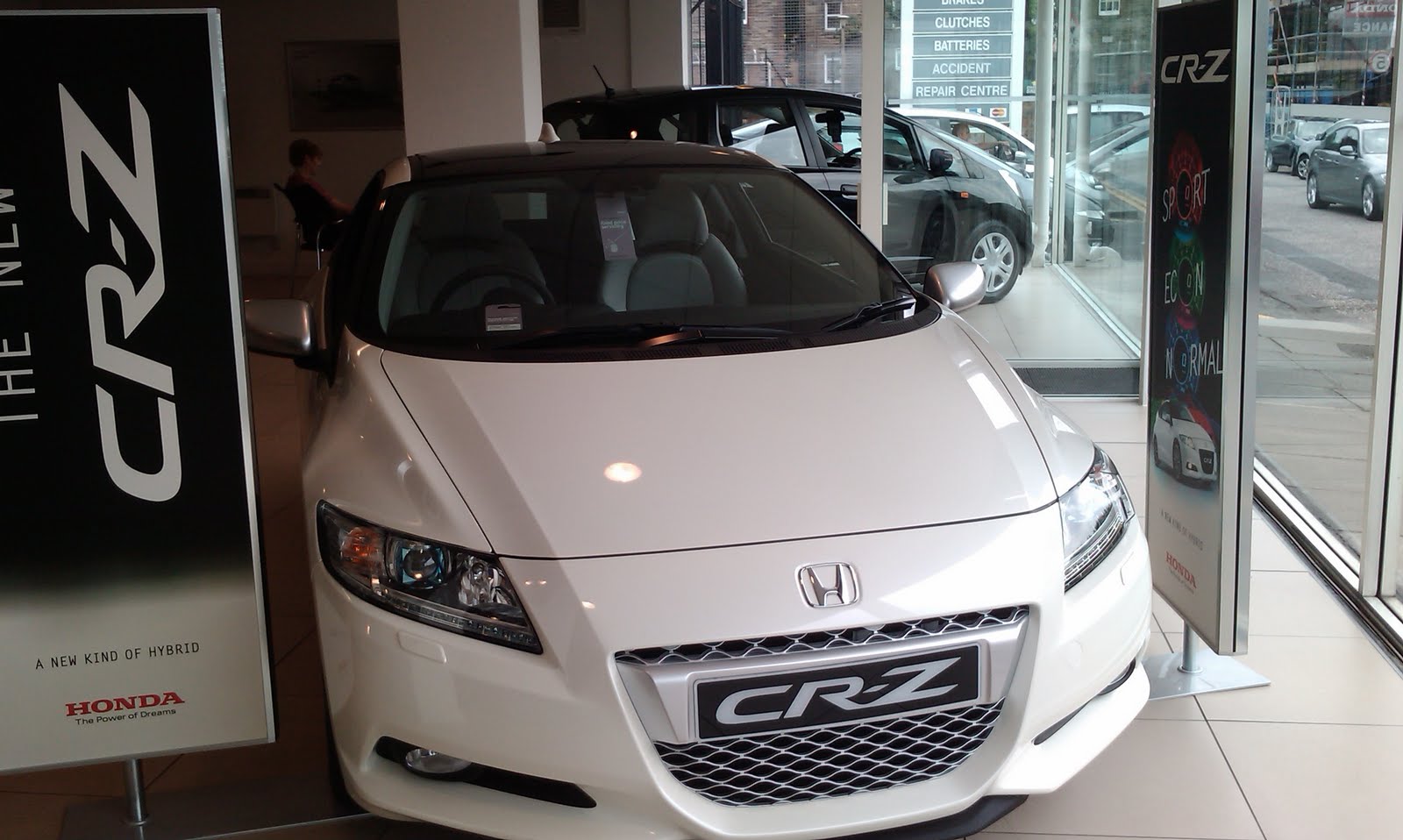
Honda CR-Z - A very hot hybrid!


The Ninja got his first look at Honda's new hybrid sports car at the weekend - the CR-Z. I have written about this awesome machine previously but today was my first chance to see one up close and to actually sit in it and, not surprisingly, as I am a fan of the Japanese firms' cars and their green technology...it is beautiful!

As you can see from the above image, it looks incredible and sits very low to the ground. Hidden beneath this exterior is a 1.5 litre petrol engine topped up with an electric engine with the electric part kicking in to add power when needed.


The car has three buttons on the dash that allow selection of one of the three driving modes - Econ, Normal or Sport. Sport obviously being the most punchy and Econ maximising the fuel efficiency. However, even in Sport mode the CR-Z does almost 40mpg. The model I saw (above) was the top-of-the-range GT edition, replete with lots of muscular carbon fibre, which retails for c£28,000.

Needless to say, I would like one!

Thursday, June 10, 2010

A red hot electric motorbike - Yes please!


There doesn't get to be much cooler technology than this motorbike in my book. The real kicker...it's electric...zero emissions!

Built by MotoCzysz, a US bike manufacturer, the E1pc will do 140mph (at present) and is doing the Isle of Man TT race this week.

Hopefully some awesome YouTube video will be forthcoming but in the meantime I have included one below of any early shakedown test. The quicker these come to market the better....

Friday, May 21, 2010

Google TV - Official and headed for your A/V rack!

Well the rumours were true and the recently mooted Google TV concept has been unveiled to the public. The device is in essence and intermediary set-top box that merges tv and online feeds in to one device. Complete with a full web browser and likely to have a keyboard built in to the remote, the device hopes to spur Google's entry in to the massive (and I mean huge!) tv advertising market.


The device will run on Android (naturally) and utilise Google's powerful search algorithm work to enhance programme look-ups etc. It will also offer hd video calling and other marketplace features. It will have Chrome as its browser and will offer Flash 10.1 support as well as WiFi and hdmi integration with your home theatre set-up.

The first devices have been unveiled by Sony and Logitech with the Logitech device looking suitably small, sleek and speedy. It can even use your iPhone or Android mobile as a remote.

Many may argue that it is essentially a stripped out media centre device and does not offer anything which a reasonable htpc doesn't right now but one cannot overlook the power of Google and their commitment to Android has shown no signs of abating, making this device a likely necessity for future viewing nirvana thanks to no doubt regular software and feature updates and hopefully a blossoming marketplace of apps that will enhance viewer/user pleasure.

Merging web and tv has been tried before but hopefully this is the one to make it happen....

Friday, May 14, 2010

Augmented Reality...simply awesome...

This commercial for the Motorola Droid nicely sums up how cool the AR apps on Android such as Layar really are...


Tuesday, May 11, 2010

YouTube IPL coverage a rousing success…


As if word of Google’s entry in to online television coverage of live events wasn’t enough, especilly when coupled with the development of Google TV set-top boxes, the Big G has announced that their coverage of the Indian Premier League cricket tournament was a resounding success attracting bigger revenues and sponsorship than anticipated.

Despite troubles off the wicket within the IPL, the online pact seems to have been a winner as 50 million people ‘surfed in’ to watch the matches (25% above target) and seven major sponsors got on board too. Revenues were not announced but either way this appears to have been a big success for Google and the IPL.

No doubt traditional broadcasters will have noticed this announcement and many may naively also see little to fear from this development. However, the increasing number of networked devices that are linked to or even integrated in televisions that are capable of carrying YouTube feeds shows that this is not a passing fad limited to those who watch television on their laptops – this is the coming mainstream where a tv subscribers choice is global and non-linear…

Android overtakes iPhone


In a notable development Android has overtaken the iPhone for 2nd place in the US smartphone market...trailing only the Blackberry.

An amazing performance for such relatively new software.

Don't underestimate the power of 'free'!

Friday, May 07, 2010

HP buys Palm...and hints at future direction


The recent purchase of Palm by HP was an unforeseen move by the world's biggest pc maker and one that clearly illustrates that even HP recognises that the future of computing will be conducted on mobile devices - either handhelds, slates or tablets.

Despite a minuscule market share, HP saw fit to grab Palm to help establish itself in the mobile marketplace. With the ongoing surge of Android, the ever-present clout of the iPhone and the coming (and much needed) revision of Windows Phone 7, there will be lots of choice for consumers. The Ninja is a Windows mobile user but has been very impressed with Android and the competition is forcing innovation. Long may it continue...

Either way, it will be fascinating to see what HP do with the WebOS of the Palm devices. WebOS looks awesome and is a solid platform so hopefully HP can build on it. Secretly, I am hoping HP do a VoodooPC edition mobile - now that would be worth buying!

Digital Economy Bill Debate

In light of the currently Election, the Ninja thought it worthwhile highlighting the leaders' responses to the Digital Economy Bill which has been widely derided...and an excellent piece from Mark Thomas...


Thursday, April 08, 2010

Digital Economy Bill – A Parliamentary Whitewash


The contentious Digital Economy Bill has been hurried through the UK Parliament to the dismay of many members of the pubic and of Parliament. The DEBill as it is known aims to deliver greater copyright protection to the digital creative arts in the UK by imposing, amongst other laws, policing requirements on internet service providers to cut off persistent offenders.

The Government saw this as an essential tool in saving ‘hundreds of millions lost from the digital creative arts industry’. Anger has followed the superquick passing of the bill as it was heard during the wash-up period that comes in to play following an announcement of a general election and politicians on all sides said they were concerned that a bill of such importance was not heard and debated properly within Westminster.

However, I take issue with the amounts being bounced around – I would suggest that these are based on a simple ‘number of downloads x DVD/CD cost’. This is surely not emblematic of a ‘true cost of piracy’ as there was no guarantee that a downloader chose to download a file rather than pay for it. The person in question might never have bought the item if the option to acquire the file through a torrent or other method was unavailable so therefore you cannot say that the revenue was ‘lost’ – it was never likely to be there in the first place. Many argued that the sales of media actually rose for the first time since 2002, poking holes in the argument of lost income even further.

I still think of this along the lines of the famous copyleft t-shirt seen above – the digital industry failed to embrace the technological changes that have come in recent years yet continues to hold on to the notion of controlling the retail channels in the old-fashioned way – supply and demand. Everything is reversed now and the quicker the creative industries realise that and adapt, the better.

Tuesday, March 23, 2010

Google TV


Word has recently emerged of a collaboration between Google and several of the big consumer electronics firms in Sony, Logitech and Intel.

It seems they are co-developing the next weapon in Google’s war on established media business models in Google TV – which is in essence an open source set-top box operating system that will unify a number of existing services (web, media centre-esque, Android etc.) in to a lounge-friendly box.

By making the system open source, they are bound to attract developers who would see this as a way of combining web-based services with the traditional delivery of tv-based content. YouTube would be a certainty to feature on the device, further boosting revenues from this now profitable arm of the Google empire.

However, Google’s interest lies not only in the sale of the no-doubt Google branded boxes but also in the advertising that would surely follow. Giving away the O.S. is only the foot in the door. Indeed, Google have already said that they are keen to see the Google TV’s O.S. in as may blu-ray, cable box, games console, tv or other devices as possible and the company sees this as a way of further establishing itself in the tv advertising market which it has fairly recently moved in to.

The existing media and cable companies, especially in the USA, must be quaking in their shoes as this appears to be another powerful attempt to draw people away from their walled-in, high cost, low value channels to Google’s completely open, internet-delivered services. Another wmd launched from the Googleplex arsenal…

(Photo courtesy of www.HiDefDigest.com)

Wednesday, March 17, 2010

Unbundled TV = Internet TV


The FCC, the US government communications regulator is likely to step in soon to sort out an on-going row between tv networks and cable operators in America over pricing, especially as the hikes demanded by the networks will more than likely be passed on directly to the consumer. The FCC is much more pro-consumer than regulatory bodies are in the UK and has a great deal of clout.

The likelihood of any FCC intervention is the forced unbundling of channels which would be like an atomic bomb on the existing business model of paid-for television. The further international impact would be that as the USA leads, the rest of the world would follow….and I think that this would be a good thing!

In the UK, gone would be the minority channels such as Discovery Shed, Men and Motors, GOLD, the ‘+1’s’ repeat channels, limited broadcast schedule channels etc. and in would come probably fewer channels but higher quality content and less repeats. The reason for this would be the need for a unique draw as competitiveness would increase. The big winners would likely be the sports channels as these always sell well and the relative cost for these would drop as they were previously only available as part of a bigger bundle. However, there can be little doubt that there would be a large number of casualties.

The cost of broadcasting would also go up as the route-to-market providers (satellite transmission providers, cable companies etc.) would seek to recoup the lost income from the missing channels by driving up prices. However, advertising re-sale would be more valuable as fewer channels would control more eyeballs. The wider impact of this is likely to be that a number of channels will move to internet based television options – either directly through their own websites or via networks such as YouTube (see my Indian Premier League cricket post).

Internet tv is cheaper to produce, broadcast and maintain and 100% of revenues generated would go to the content creator – an incredibly appealing business model. With more and more devices networked to receive internet broadcasts including mobile phones, blu-ray players, ipads, ipods and network streamers, the accessibility of internet tv has moved beyond home theatre pc’s and gone mainstream. Even games consoles are in the mix with Sky’s channels now available on the Xbox 360.

Is seems inevitable that this will happen and the impact will be massive – a fundamental shift in broadcasting and if it comes to the point where television is delivered over your internet connection, necessitating a need for hat is in essence an always-on pc in your living room, then people will have no problem moving everything over this network too. Therefore telephone companies, radio networks, even gaming providers (see the impact of OnLive) should be fearful as well. The pc will be the even bigger doorway to the digital future and its primary weapon will be the internet.